Top Free Headless CMS Platforms: Unleash Your Content
In the world of content management systems (CMS), the traditional approach of managing content within the confines of a pre-designed template is evolving. Enter headless CMS platforms, a revolutionary way to manage, create, and deliver content without the constraints of a specific presentation layer. In this article, we will explore the top free headless CMS platforms that empower creators to unleash their content in innovative ways.
Table of Contents
- Introduction
- What is a Headless CMS?
- Advantages of Headless CMS
- Top Free Headless CMS Platforms
- Squidex: Power and Flexibility
- Strapi: Unleash the API
- Contentful: Beyond Traditional CMS
- ButterCMS: Simplicity and Speed
- Ghost: Not Just a Blogging Platform
- How to Choose the Right Headless CMS
- Getting Started with Squidex
- Installation and Setup
- Creating Content Schemas
- Managing and Publishing Content
- Integrating with Other Tools
- Exploring Strapi's Capabilities
- Installation and Initial Configuration
- Creating Content Types
- Custom API Creation
- Collaboration and Workflow
- Contentful: More than Content Management
- Creating a Space and Content Model
- Managing Entries and Assets
- Extending Functionality with Apps
- Enabling User Roles and Permissions
- ButterCMS: A Simple Approach
- Setting Up ButterCMS
- Creating and Managing Content
- SEO Optimization with ButterCMS
- Collaboration and Content Scheduling
- Ghost: Not Just for Blogging
- Installing Ghost CMS
- Creating and Managing Posts
- Themes and Customization
- Membership and Subscription Features
- Pros and Cons of Headless CMS
- Future Trends in Content Management
- Conclusion
Introduction
The landscape of content management is rapidly changing, with the rise of headless CMS platforms offering a new paradigm for content creators. Unlike traditional CMS, where content is tightly coupled with its presentation, headless CMS decouples content creation and management from its delivery. This separation allows for greater flexibility, scalability, and the ability to adapt content to various platforms seamlessly.
What is a Headless CMS?
A headless CMS is a content management system that focuses solely on content creation, organization, and storage. Unlike conventional CMS platforms, a headless CMS does not concern itself with how content is presented to users. Instead, it exposes content through APIs, enabling developers to fetch and display it on different devices and platforms. This architecture provides a versatile way to manage content while offering the freedom to craft unique digital experiences.
Advantages of Headless CMS
Headless CMS platforms offer several advantages over traditional CMS:
- Flexibility: With no predefined templates, content can be delivered consistently across various devices and platforms.
- Scalability: Headless CMS enables seamless scaling, especially for applications with complex content needs.
- Content Reusability: Content created in a headless CMS can be repurposed across multiple projects, saving time and effort.
- Faster Time-to-Market: Developers can work independently on the front-end and back-end, reducing development time.
- Future-Readiness: Adapting content for new technologies becomes easier with APIs and a separated content layer.
Top Free Headless CMS Platforms
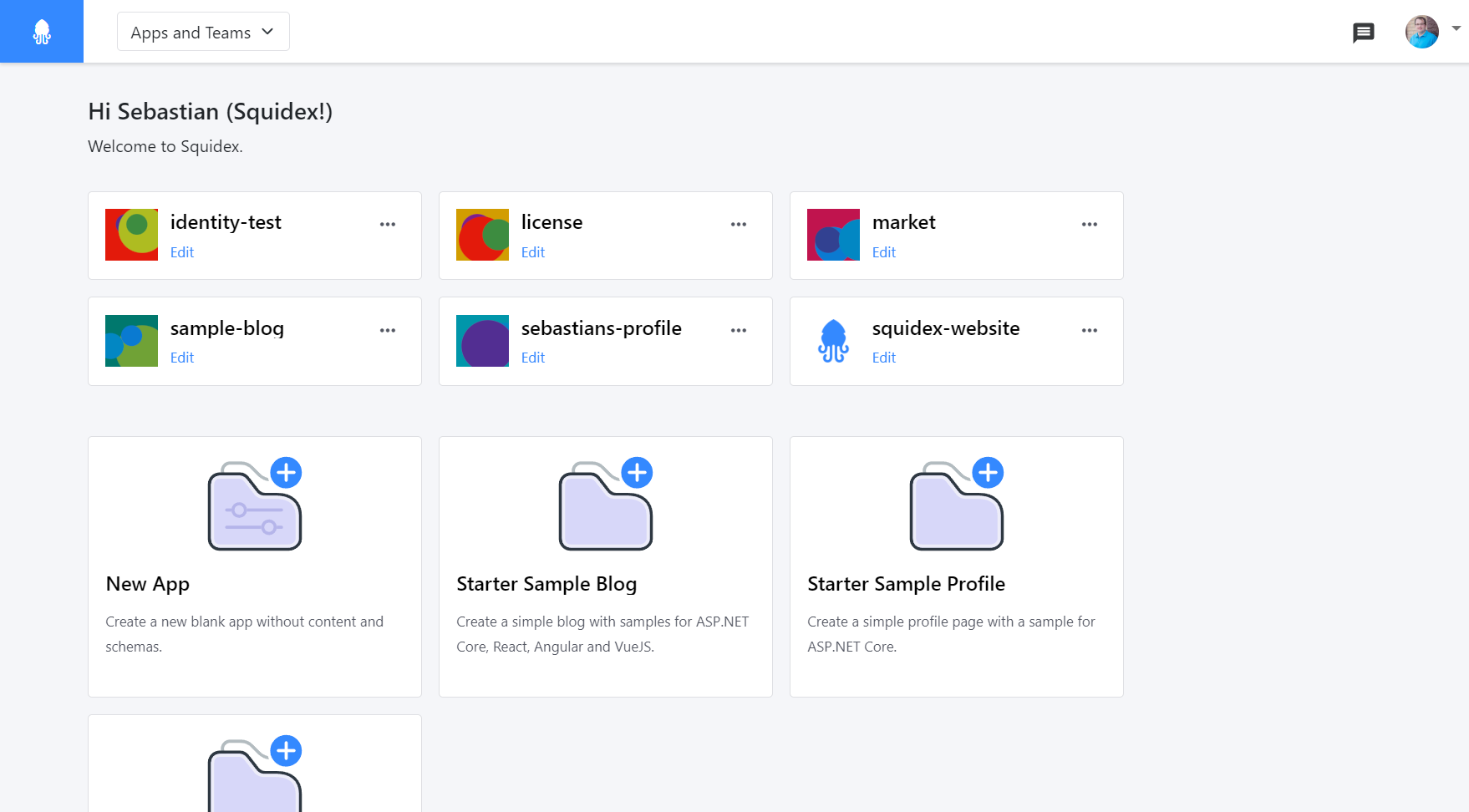
Squidex: Power and Flexibility
Squidex stands out as a powerful open-source headless CMS that offers a rich set of features. It enables creators to define custom content schemas, making it suitable for various use cases, from simple blogs to complex enterprise applications.
Strapi: Unleash the API
Strapi empowers developers with an open-source headless CMS that boasts an intuitive interface. It offers customizable content types, making it ideal for projects that demand tailored content structures.
Contentful: Beyond Traditional CMS
Contentful focuses on delivering content beyond websites. Its cloud-based headless CMS enables content to be distributed across mobile apps, wearable devices, and other digital touchpoints.
ButterCMS: Simplicity and Speed
Known for its simplicity, ButterCMS offers an easy-to-use headless CMS solution. It integrates seamlessly with various tech stacks and provides a range of pre-built templates.
Ghost: Not Just a Blogging Platform
While Ghost gained popularity as a blogging platform, it has evolved into a versatile headless CMS. It's designed for writers and publishers who seek a simple yet powerful content management experience.
How to Choose the Right Headless CMS
Selecting the right headless CMS depends on factors like the project's complexity, team's technical expertise, and scalability requirements. Consider aspects such as content modeling, API capabilities, third-party integrations, and community support when making your choice.
Getting Started with Squidex
Installation and Setup
To begin with Squidex, you need to set up the platform on your server or use the cloud version. The installation process is straightforward and well-documented.
Creating Content Schemas
Squidex allows you to define custom content schemas using its user-friendly interface. You can create various field types, relationships, and validations to structure your content.
Managing and Publishing Content
Once your schema is in place, you can start creating and managing content. Squidex provides a collaborative environment for teams to work together seamlessly.
Integrating with Other Tools
Squidex supports integration with various tools and platforms through its APIs. This enables you to extend the functionality of your headless CMS to suit your needs.
Exploring Strapi's Capabilities
Installation and Initial Configuration
Getting started with Strapi involves setting up your environment and configuring your first Strapi project. The platform offers detailed guides for this process.
Creating Content Types
Strapi allows you to create and customize content types to match your project's requirements. You can define fields, relationships, and validation rules.
Custom API Creation
One of Strapi's strengths is its ability to automatically generate APIs based on your content types. This significantly speeds up the development process.
Collaboration and Workflow
Strapi offers user roles and permissions, enabling efficient collaboration among team members. You can define access levels for different users based on their responsibilities.
Contentful: More than Content Management
Creating a Space and Content Model
In Contentful, you start by creating a space for your project. Within that space, you can define content models that structure your content.
Managing Entries and Assets
Contentful makes it easy to create and manage content entries. You can also upload and organize digital assets, such as images and videos.
Extending Functionality with Apps
Contentful's marketplace of apps allows you to extend the platform's functionality. You can integrate apps to enhance content creation and management.
Enabling User Roles and Permissions
Contentful provides role-based access control, allowing you to manage user permissions effectively. This ensures that only authorized users can perform specific actions.
ButterCMS: A Simple Approach
Setting Up ButterCMS
Getting started with ButterCMS involves signing up and connecting your application. Once connected, you can start creating content.
Creating and Managing Content
ButterCMS offers a straightforward interface for creating content. You can organize your content using categories and tags for easy navigation.
SEO Optimization with ButterCMS
One of ButterCMS's strengths is its focus on SEO optimization. It provides tools and features to help your content rank well in search engines.
Collaboration and Content Scheduling
ButterCMS allows for collaboration among team members. You can schedule content to be published at specific times, streamlining your content strategy.
Ghost: Not Just for Blogging
Installing Ghost CMS
You can set up Ghost CMS on your server or use Ghost(Pro) for a managed solution. The installation process is well-documented and user-friendly.
Creating and Managing Posts
Ghost CMS simplifies content creation with its editor. You can create and format posts using a clean and intuitive interface.
Themes and Customization
Ghost offers a range of themes to customize the look and feel of your website. You can also develop your own themes for a unique appearance.
Membership and Subscription Features
Ghost has robust membership and subscription features. You can offer premium content to subscribers and manage their access.
Pros and Cons of Headless CMS
While headless CMS platforms offer numerous benefits, they also come with drawbacks. Pros include flexibility and scalability, but cons involve potential complexity and steeper learning curves for non-developers.
Future Trends in Content Management
The evolution of headless CMS is set to continue, with more focus on AI-driven content personalization, enhanced integrations, and seamless multi-channel content delivery.
Conclusion
In the ever-changing landscape of content management, headless CMS platforms have emerged as a game-changer. They offer unparalleled flexibility, scalability, and the ability to create truly unique digital experiences. As you explore the world of headless CMS, remember to assess your project's needs and choose the platform that aligns with your goals.
FAQs
Is a headless CMS suitable for all types of websites? Headless CMS is particularly suitable for websites that require content to be delivered across multiple platforms and devices.
Do I need coding skills to use a headless CMS? While coding skills are beneficial for customization, many headless CMS platforms offer user-friendly interfaces for content creation and management.
Can I migrate from a traditional CMS to a headless CMS? Yes, migration is possible, but it may require adapting your content structure to fit the headless architecture.
What's the main advantage of Contentful over other headless CMS platforms? Contentful's focus on delivering content to various digital touchpoints sets it apart from many other headless CMS options.
Are there any security concerns with headless CMS platforms? Security is a consideration for any software platform. It's essential to choose a reputable headless CMS provider and follow best practices for securing your content and data.
Comments
Post a Comment